
Family Problems

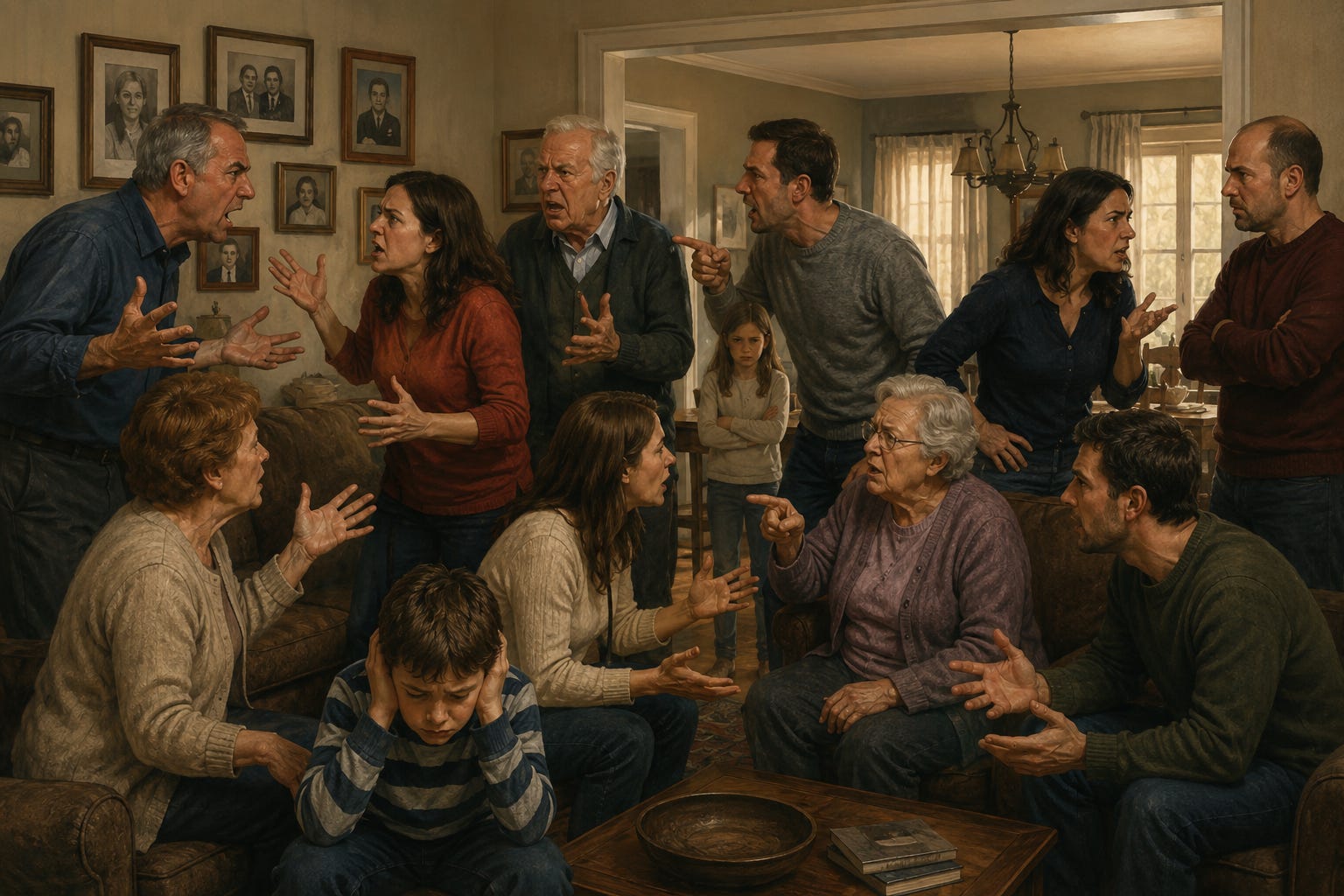
"Family quarrels are bitter things. They don't go according to any rules... they're more like splits in the skin that won't heal because there's not enough material." — F. Scott Fitzgerald
“Family is supposed to be our haven. Very often, it’s the place where we find the deepest heartache.” — Iyanla Vanzant
There is an old saying that we choose our friends but not our family. The longer I have lived, the more truth I have found in those simple words.
An extended family is a larger family group beyond parents and children. It includes grandparents, aunts, uncles, cousins, and other relatives who share family ties. In many families, these relationships provide love, support, guidance, and a sense of belonging. Some people grow up surrounded by warmth and affection from their extended family and carry those memories with them throughout their lives.
Unfortunately, that is not true for everyone.
Many people grow up in extended families filled with tension, anger, criticism, grudges, and endless arguments. Family gatherings that should bring people together instead become occasions for conflict. Old resentments are never forgotten. Small disagreements become major battles. People take sides. Some relatives stop speaking to each other for years. Children sit quietly and watch adults quarrel, often feeling confused, frightened, and powerless.
I understand this reality because I grew up in a family where conflict was often present. Some people loved one another, but there was also anger, criticism, and emotional distance. Like many children, I learned early that being related by blood does not automatically create kindness, understanding, or emotional safety.
One of my uncles reached a conclusion many years ago that has stayed with me throughout my life. He came to believe that what mattered most was not the larger extended family but the smaller family he created with his wife and children. He had grown tired of the arguments, the hostility, and the endless family disputes. His focus became the people he loved most and the home he wanted to build with them.
As I have grown older, I have come to understand his point of view.
Family relationships can enrich our lives, but they can also wound us. Some relatives encourage us and help us become our best selves. Others bring criticism, conflict, and emotional pain. The fact that someone is a relative does not automatically make them a healthy presence in our lives.
One of the lessons I learned during my years as a psychotherapist is that many adults continue to carry the emotional scars of difficult family relationships long after childhood has ended. Some struggle with anxiety. Others struggle with depression, low self-esteem, or feelings of not belonging. They may spend years trying to understand why family relationships that should have provided comfort instead became sources of pain.
Yet there is hope.
As adults, we may not be able to choose the family we were born into, but we can choose the kind of relationships we build. We can choose kindness over hostility. We can choose understanding over criticism. We can create friendships that feel more supportive than some family relationships ever were. We can build homes where respect and affection replace conflict and resentment.
In many ways, that is what maturity means. It means accepting the family we inherited while recognizing that we are free to create a different future.
The family we are born into shapes us, but it does not have to define us forever.
Perhaps the deepest truth is that love is not guaranteed by blood. Love is created through kindness, respect, loyalty, and care. Those qualities can exist within families, friendships, and communities.
We may not choose our family, but we can choose the values by which we live. In the end, those choices often matter far more than the circumstances into which we were born.

I have also written (and said): "Sometimes we get stuck with our friends, but at least we can choose our families." Thus, I have "adopted" (not legally or officially) sisters, goddaughters, and even a granddaughter!
Thanks again, Allan. As you know, my family of origin experiences were very different than yours. In reading your essays, I look way back to my family experiences in East Paterson, and my appreciation for them, and for my parents, brothers, and other family, continues to grow. I was fortunate.